

What a Siding Crew May Find After Old Siding Comes Off
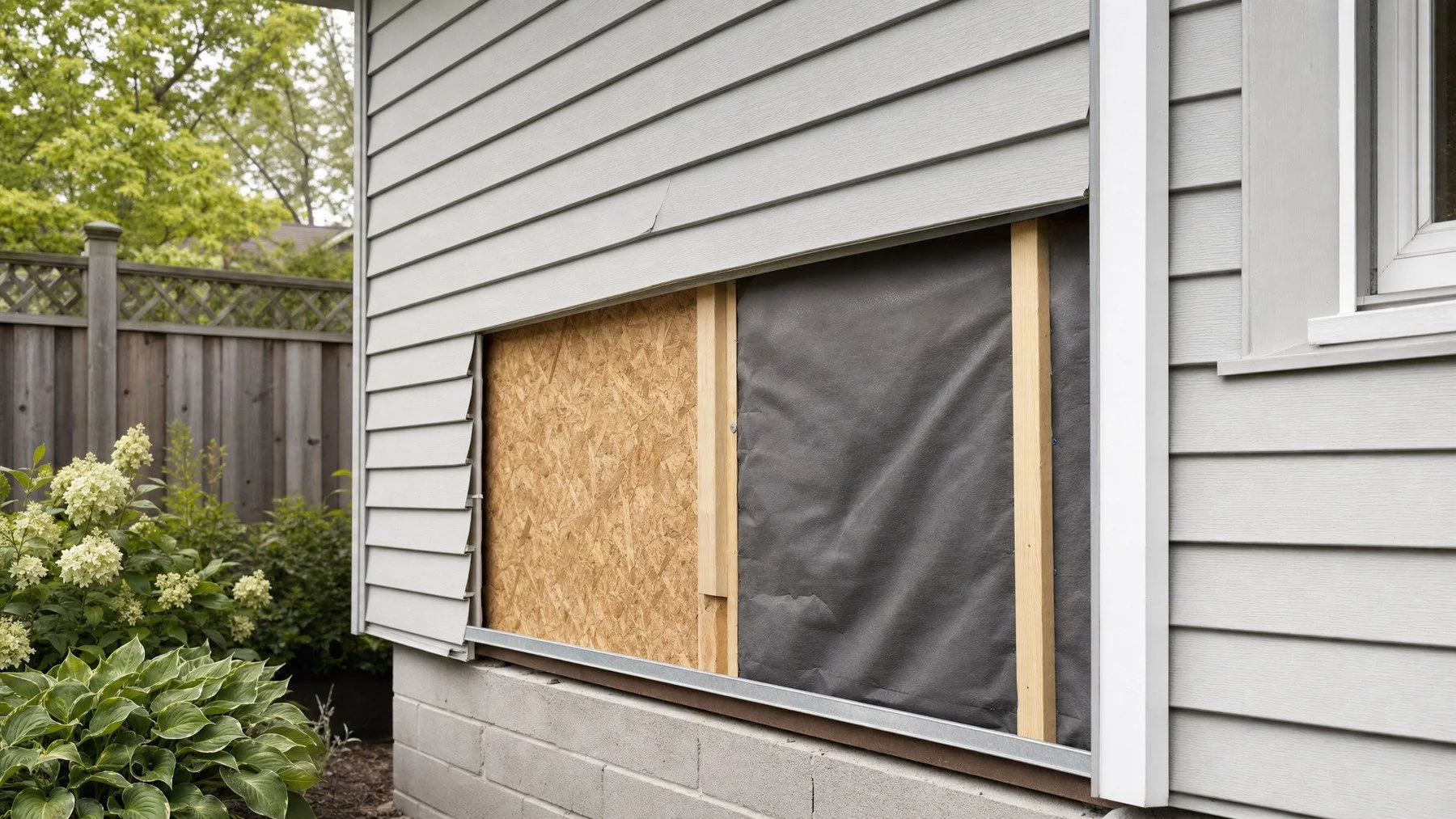
Illustrative image. Not a photograph of a Peace of Mind Exteriors project.
A siding replacement quote is prepared while most of the wall is still covered. Once the old siding comes off, the crew can see the barrier, sheathing and flashing that were hidden. The finding may confirm the original plan, or it may show a repair that needs a separate decision. Knowing the sequence in advance makes that moment easier to handle.
Peace of Mind Exteriors' Oakville siding service describes inspecting sheathing, housewrap and flashing during siding work. That does not mean every wall has hidden damage. It means the visible panel is only one part of the assembly the crew will be covering again.
Three different findings lead to different next steps
The exposed sheathing is sound. The crew can prepare the wall for the specified new siding after checking the barrier and transitions. Ask which existing materials remain and which are being installed anew. “No damage found” should refer to the area that was actually opened, not to every concealed surface on the house.
The barrier is torn or interrupted. The Polymeric Exteriors installation guidance explains that vinyl siding belongs over a continuous water resistive barrier. The crew needs to restore a continuous layer compatible with the wall and connect it with the relevant flashing before covering it. Replacing only the outer panels would leave the exposed gap unanswered.
An opening transition needs work. The barrier may look sound across the open wall but end poorly at a window, door or roof line. The crew should identify the exact junction and the product specific flashing method it will use. If an existing unit must be disturbed, that is a different decision from replacing a panel in the open field of the wall.
These outcomes should not be collapsed into one vague “hidden damage” allowance. A sound sheet of sheathing, a torn barrier and a defective transition involve different materials and different work areas. Ask the crew to identify which condition it actually found before the new siding conceals it.
The Polymeric Exteriors panel replacement guidance covers replacing the visible cladding. It does not substitute for inspecting the exposed wall. Keep the finding and the proposed wall repair on the same written change record.
Keep each wall face identifiable
If several sides of the house are being replaced, label observations by elevation or by a nearby opening. The south wall may expose a sound barrier while the garage wall needs a local correction. One photograph of a problem cannot establish the condition of every wall. A location labelled record helps the crew discuss exactly which area is ready to cover and which area needs more work.
Keep the finish choice separate from the assembly choice. A different siding colour or profile is visible. Repairing a torn barrier happens behind it. The related siding material guide helps with the finish. The on site inspection determines whether the wall beneath that finish is ready to be covered.
Ask who will inspect and document the open wall before the new cladding goes on. The company overview explains who you are hiring, while the written scope should name the condition actually found at your house.
Request a written exterior assessment. Planning siding replacement? Ask Peace of Mind Exteriors how its crew will assess each exposed wall face and address the actual condition before new panels go on. Contact the team to arrange a site visit.